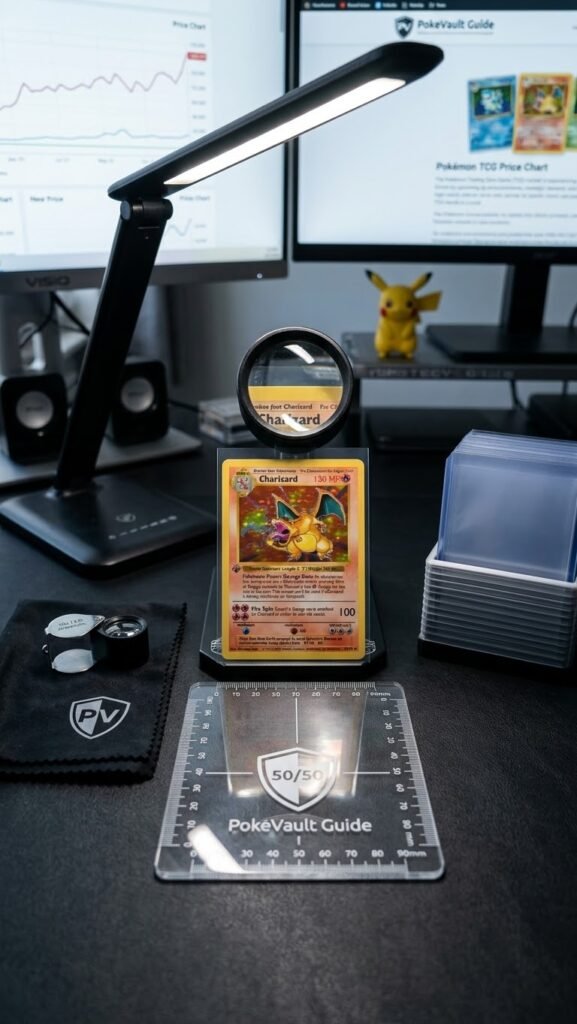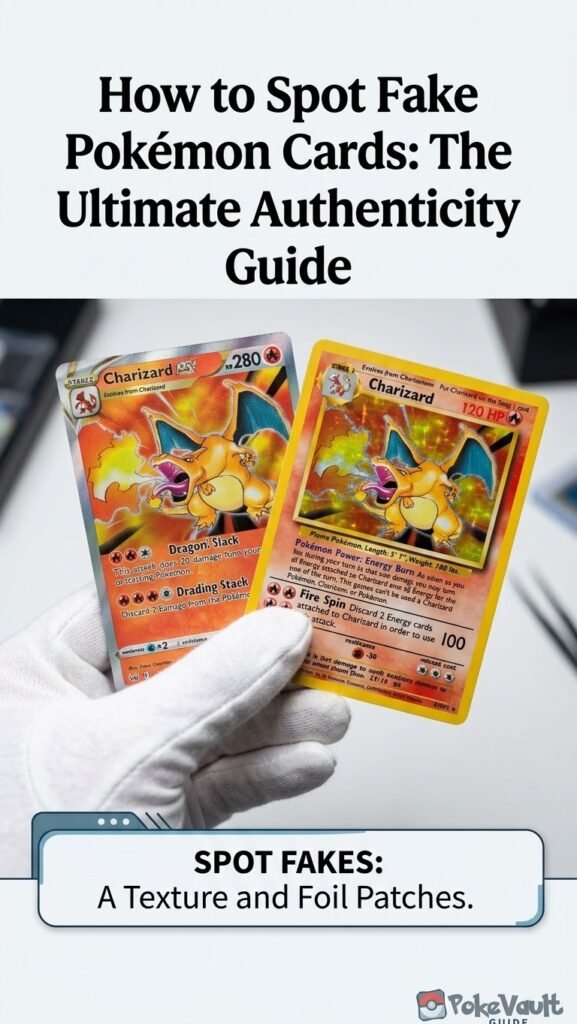
When collecting Pokémon Trading Card Game (TCG) items, ensuring the authenticity of your collection is paramount. With the rise of secondary market valuations, counterfeiters have developed increasingly sophisticated fake cards. This guide breaks down the primary physical checks and verification steps every collector needs to evaluate Pokémon card authenticity.
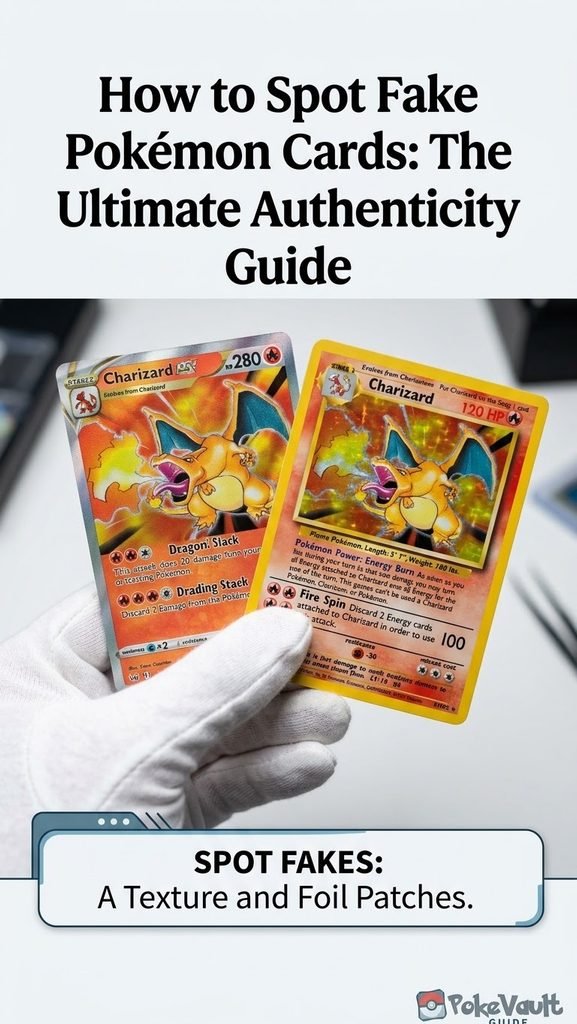
1. The Light Test & Card Stock Density
Authentic Pokémon cards are manufactured by layering two pieces of paper with a specialized black or blue opaque layer sandwiched between them. This structure provides structural rigidity and prevents light from easily passing through.
To perform the light test:
- Hold a phone flashlight directly behind the card.
- An authentic card will diffuse the light, showing only a dim, muted glow.
- Counterfeit cards often use thin, single-ply paper stock, allowing intense light to bleed straight through.
2. Text, Typography, and Spelling Errors
Counterfeiters frequently mess up the exact typography used by Creatures Inc. and The Pokémon Company.
Pay close attention to:
- Font Consistency: Fake cards often use generic system fonts (like Arial or Times New Roman) instead of the official Gill Sans variant used on real cards.
- Accents: The “é” in Pokémon must always include the accent mark. Missing accents are a guaranteed indicator of a fake.
- Energy Symbols: On fake cards, energy symbols inside attack costs are often misaligned, resized, or improperly centered.
3. Surface Texture and Holofoil Quality
Modern ultra-rare cards—such as Secret Rares, Full Arts, and Alternate Arts—feature distinct physical texture patterns etched directly onto the surface.
- Texture Check: Run your thumb gently across a Full Art card. Authentic cards feature intricate, fingerprint-like ridges. Fake cards are usually completely smooth and glossy.
- Holo Sheen Direction: On authentic Vintage or Ultra Rare cards, the holographic sheen moves diagonally or in structured patterns. Fake cards often display a vertical rainbow sheen that covers the entire card, including the text boxes.
4. Back Card Border and Color Depth
The back of a Pokémon card is one of the hardest elements for counterfeiters to replicate correctly.
- Color Precision: The dark blue areas on the back of a real card feature rich navy tones with detailed swirls. Fake cards often show faded blue, washed-out tones, or an overly purple hue.
- Poké Ball Details: The top half of the Poké Ball on the back should be a crisp red with clear shading. Fakes often present a uniform, flat red color.
Conclusion
Before purchasing high-value single cards online or at local card shows, always apply these four verification methods. If a deal seems too good to be true, inspect the texture, light transparency, and typography carefully before completing the transaction.