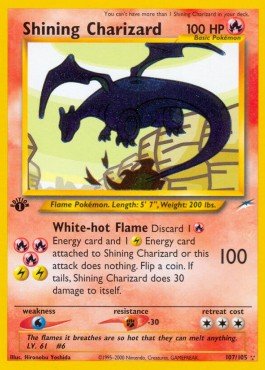
When collectors talk about iconic vintage Pokémon cards outside of the original Base Set, the Secret Rare Shining Charizard #107 from the 2002 Neo Destiny expansion always tops the list. As the very first Secret Rare Charizard ever printed in the Pokémon Trading Card Game, its unique glittery foil design and iconic artwork make it a cornerstone of high-end vintage collections.
Whether you are evaluating a raw copy found in an old binder or analyzing market movements for graded slabs, this complete price guide breaks down current market values, edition differences, and historical trends for Shining Charizard.
Shining Charizard Market Value Overview
Values for Shining Charizard depend heavily on print edition (1st Edition vs. Unlimited) and physical condition. Because Neo Destiny had a relatively limited print run compared to modern sets, high-grade copies command massive premiums in today’s secondary market.
- Raw / Ungraded (Lightly Played to Near Mint): $850 – $1,800 (Depending on foil wear and centering)
- PSA 7 / BGS 7.5 (Mid-Grade Slabs): $1,200 – $2,100
- PSA 9 Mint: $3,500 – $4,800
- PSA 10 Gem Mint (Unlimited): $11,000 – $14,500
- PSA 10 Gem Mint (1st Edition): $28,000 – $35,000+
The Revolutionary Shining Holofoil Technology of Neo Destiny
Released in 2002 by Wizards of the Coast, the Neo Destiny expansion introduced a groundbreaking aesthetic to the Pokémon TCG: the “Shining” Pokémon. Unlike standard holographic cards where the background shines, Shining Charizard #107 featured a multi-colored refractive foil pattern where the Pokémon character itself shimmered across textured, sparkling artwork. Illustrated by Ken Sugimori, this distinct visual treatment required complex print alignment, making pristine copies exceptionally scarce today.
Shining Charizard #107: Market Value & Grading Breakdown
Because Neo Destiny marked the twilight era of Wizards of the Coast production, print runs were significantly lower than earlier Base Sets. Below is the current market breakdown for raw and professionally graded copies based on recent secondary market transactions:
| Condition / Grade | Unlimited Price Range | 1st Edition Price Range |
|---|---|---|
| Raw / Ungraded (LP to NM) | $850 – $1,000 | $2,000 – $3,500 |
| PSA 7 / BGS 7.5 (Mid-Grade) | $1,200 – $2,100 | $4,000 – $6,500 |
| PSA 9 Mint | $3,500 – $4,800 | $10,000 – $14,000 |
| PSA 10 Gem Mint | $11,000 – $14,500 | $28,000 – $35,000+ |
Investment Outlook: Why Shining Charizard Remains a Holy Grail
For elite collectors and alternative asset investors, Shining Charizard represents the ultimate blue-chip cornerstone. The combination of low 2002 print numbers, extreme vulnerability to surface scratching on the sparkling foil, and the sheer cultural dominance of Charizard guarantees long-term portfolio stability. As high-grade vintage supply continues to dry up, secure slabs in PSA 9 or PSA 10 remain among the most sought-after assets in the entire hobby.
1st Edition vs. Unlimited: How to Spot the Difference
Identifying the edition of your Neo Destiny Shining Charizard is crucial before attempting to buy or sell:
- 1st Edition: Features a small black circular “Edition 1” logo on the left side of the card, just below the card art box. This version commands a 150% to 200% price premium over Unlimited copies.
- Unlimited Edition: Lacks the 1st Edition stamp. While slightly more common, it remains exceedingly rare in Gem Mint condition due to factory print line issues common in the Neo era.
Why Shining Charizard Retains Long-Term Value
Unlike modern Secret Rares with high pop reports, Neo Destiny was released near the end of the original Wizards of the Coast (WOTC) era when print runs were shrinking. The foil technology used on Shining Pokémon highlighted the character itself rather than the background, creating a distinct visual appeal that hasn’t been replicated since.
For investors and vintage enthusiasts, Shining Charizard remains a resilient asset with low population growth in top-tier grades, making it one of the safest blue-chip collectibles in the Pokémon TCG ecosystem.
Common Print Quality Issues & Factory Errors
Because Neo Destiny was printed during the transitional period of late Wizards of the Coast production, quality control varied significantly compared to modern Pokémon sets. Collectors often encounter specific factory flaws that directly impact grading and valuation:
- Print Lines: Fine vertical or horizontal lines running across the foil surface are a common factory defect on Neo-era holos, often reducing a potential PSA 10 to a PSA 8 or 9.
- Silvering: Tiny chips or exposure of the silver foil along the outer edges of the card border due to imperfect cutting blades at the factory.
- Centering Disparities: Vintage WOTC machinery frequently produced heavy left-to-right or top-to-bottom borders, making true 50/50 centering a massive premium for investors.
The Cultural Legacy of Neo Destiny (2002)
As the final set block produced entirely by Wizards of the Coast before Nintendo took over organized play and distribution, Neo Destiny holds a sacred nostalgic status. Shining Charizard #107 acts as the crown jewel of this era. Owning one isn’t just about financial appreciation; it represents holding a literal piece of trading card history that bridged the gap between the classic Base Set era and modern collecting standards.
Frequently Asked Questions (FAQ)
Q: What makes Shining Charizard #107 so valuable compared to other Charizard cards?
A: Shining Charizard is historically significant because it is the very first “Secret Rare” card ever printed in the Pokémon TCG (featuring card number #107/105, exceeding the official set count). Combined with its unique multi-colored foil artwork and low 2002 print run from the Neo Destiny expansion, it remains an absolute holy grail for vintage collectors.
Q: How can I tell the difference between 1st Edition and Unlimited versions?
A: Look closely at the left side of the card, just below the bottom-left corner of the illustration box. 1st Edition versions feature a small, black circular “Edition” stamp. Unlimited versions lack this stamp entirely, making 1st Edition copies significantly rarer and more expensive.
Q: Is Shining Charizard a good long-term investment?
A: Yes. Because vintage Wizards of the Coast (WOTC) cards have a fixed supply that will never increase, high-grade copies (especially PSA 9 and PSA 10) act as blue-chip alternative assets. Their historical demand and cultural prestige ensure strong long-term market resilience.
Final Thoughts on Collecting Vintage Charizards
Building or investing in a vintage Pokémon collection requires patience, a keen eye for condition, and an understanding of historical printing eras. Whether you are hunting for a raw copy to fill a binder or securing a pristine graded slab for an investment portfolio, Shining Charizard remains the pinnacle of 2000s trading card nostalgia. Always verify authenticity, check for surface micro-scratches on the foil, and buy from trusted sources to ensure your collection retains its peak value for years to come.