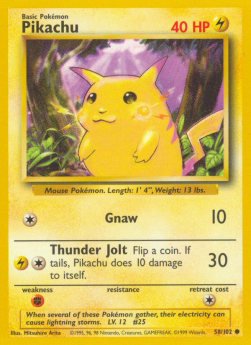
The Base Set Pikachu #58 is one of the most iconic and recognizable cards in the entire Pokémon Trading Card Game. Released in 1999, this vintage common card holds a massive price spread depending on artwork variations and print runs.
Whether you are evaluating a childhood collection or checking historical auction sales on PSA, this guide covers exact market values, error authentication, and key differences between Red Cheeks and Yellow Cheeks prints.
Pikachu Base Set Market Price Breakdown
Below is the current market breakdown for ungraded and graded copies based on recent secondary market sales:
| Card Version / Variant | Condition / Grade | Estimated Value | Rarity Status |
|---|---|---|---|
| Pikachu Red Cheeks 1st Edition #58 | PSA 10 (Gem Mint) | $3,500 - $5,000 | Rare Variant |
| Pikachu Yellow Cheeks 1st Edition #58 | PSA 9 (Mint) | $150 - $250 | Common |
| Pikachu Unlimited Base Set #58 | Raw / Ungraded (NM) | $5 - $15 | Common |
Red Cheeks vs. Yellow Cheeks Differences
The core distinction in Base Set Pikachu cards comes down to an artwork error corrected during production:
- Red Cheeks Error: Illustrator Mitsuhiro Arita originally intended for Pikachu’s cheeks to match its electric sparks, but the early print runs featured red cheeks. This error appears in 1st Edition and early Shadowless prints, making it highly valuable.
- Yellow Cheeks Standard: Wizards of the Coast corrected the artwork to show yellow cheeks to reflect the original design intent. This version appears across late Shadowless prints and all Unlimited runs.
1st Edition, Shadowless, and Unlimited Variants
Apart from cheek color, print runs drastically dictate the final grade and market value:
- 1st Edition (Red & Yellow Cheeks): Features the Edition 1 symbol on the left side. Red Cheeks 1st Edition commands a major collector premium.
- Shadowless: Lacks the 3D drop shadow around the art frame. Both Red and Yellow Cheeks variants exist in Shadowless.
- Unlimited: Features the 3D shadow effect on the right border. Only exists as Yellow Cheeks in standard English releases.
Key Grading & Condition Factors
Because Pikachu #58 is a common card, condition is everything when pushing for higher values:
- Surface Scratches: Clean non-holo yellow borders are prone to dirt build-up and surface scuffs.
- Centering Ratios: Miscut borders or off-center print lines heavily penalize raw copies aiming for PSA 10 Gem Mint status.
- Back Edgewear: Blue back borders often reveal white chipping along edges and corners.
Why Red Cheeks Pikachu Commands a Massive Premium
To the untrained eye, a Pikachu card is just a Pikachu card. However, vintage Pokémon TCG experts know that the “Red Cheeks” variant (where Pikachu’s face features blushed red circles instead of solid yellow) represents one of the most famous error/variant corrections in the hobby’s history.
Because Wizards of the Coast corrected this design flaw very early in the 1999 print run, Red Cheeks copies—especially in 1st Edition and Shadowless stamps—have significantly lower population reports (pop reports) at grading companies like PSA, making them prime targets for serious vintage investors.
Collector’s Strategy: Should You Grade Unlimited Yellow Cheeks?
Unlike the ultra-rare Red Cheeks or 1st Edition variants, the Unlimited Yellow Cheeks Pikachu (#58) was printed in massive quantities. If you find a raw copy in your old binder, keep the following grading rules in mind:
- High Population Reality: Because millions of Unlimited Yellow Cheeks were printed, mid-grade copies (PSA 5 to 7) often sell for less than or equal to the cost of grading fees. Only submit copies that have a realistic shot at a PSA 9 or PSA 10.
- Surface Vulnerability: The yellow background on Base Set cards shows dust accumulation, minor print dots, and light scratching very easily. Always inspect the card under direct LED light before sending it off for encapsulation.
The 1999 Wizards of the Coast Era: Contextualizing Pikachu #58
To truly understand the value of a Base Set Pikachu, one must look back at the absolute genesis of the English Pokémon TCG. Released in late 1999 by Wizards of the Coast (WotC) under license from Nintendo, the Base Set established the foundational rules, template design, and rarity symbols that collectors still recognize today. While Charizard commanded the hype, Pikachu was the cultural face of the franchise.
During the initial printing presses, quality control was far less rigid than it is today, leading to fascinating anomalies like the Red Cheeks variant, ink blobs, and varying border thicknesses. These production quirks are precisely what turn ordinary cards into multi-thousand-dollar vintage holy grails.
Storage and Preservation Best Practices for Vintage Pokémon Cards
Preserving the condition of a vintage Base Set Pikachu requires strict environmental controls, especially given the vulnerability of 1990s English card stock to edge whitening and moisture warping:
- Double Sleeving: Always use a tight-fit inner sleeve (like KMC Perfect Fit) paired with an outer deck protector or semi-rigid holder (such as Cardboard Gold PSA submission savers) to keep dust and air out.
- UV Protection & Lighting: Never display vintage cards in direct sunlight or under intense halogen track lighting. UV rays will fade the vibrant yellow borders and bleach the red cheek artwork over time.
- Climate Control: Keep your collection in a temperature and humidity-controlled room. Fluctuating humidity causes cardboard to expand and contract, leading to warping of the card stock and foil layers.
Grading Companies Comparison: PSA vs. BGS vs. CGC for Pikachu
When deciding whether to encapsulate your Base Set Pikachu, understanding grading tier standards is crucial for maximizing return on investment. Not all grading slabs carry the same weight in the vintage Pokémon market:
- PSA (Professional Sports Authenticator): The undeniable gold standard for vintage Pokémon card liquidity and market value. A PSA 10 Gem Mint Red Cheeks Pikachu commands an exponential market premium compared to lower tiers.
- BGS (Beckett Grading Services): Known for strict sub-grades (Centering, Corners, Edges, Surface). Securing a BGS 9.5 or pristine BGS 10 rivals or even exceeds PSA 10 values due to the extreme difficulty of achieving sub-grades on 1990s card stock.
- CGC (Certified Guaranty Company): Offers reliable authentication and faster turnaround times, making it a stellar option for mid-tier vintage preservation and budget-conscious collectors.
Buying Guide: How to Safely Purchase Raw Pikachu Cards Online
Purchasing an ungraded (raw) Base Set Pikachu—especially when hunting for the elusive Red Cheeks error variant—carries significant risks. To protect your wallet from counterfeits, follow these professional acquisition tips:
- Demand High-Resolution Scans: Never buy a vintage card based on blurry marketplace photos. Always request clear, well-lit images of the front, back, and corners against a dark solid background to easily spot edge whitening or surface scratches.
- The Smartphone Light Test: Authentic 1999 WotC card stock features a thick, opaque black inner layer. When purchasing in person, shining a smartphone flashlight directly at the back of the card will reveal if light passes straight through (a dead giveaway of a fake counterfeit proxy).
- Verify Seller Reputation: Stick to established TCG platforms or sellers with proven vintage references. If a Red Cheeks Pikachu is priced 70% below market value, it is almost certainly a scam.
Frequently Asked Questions (FAQ)
Why is the Red Cheeks Pikachu worth more?
The Red Cheeks variant is an early printing error that was quickly corrected, resulting in significantly lower pop reports and high collector demand.
Is Unlimited Yellow Cheeks Pikachu worth grading?
Generally, only copies in pristine condition (potential PSA 9 or PSA 10 candidates) are worth submitting for grading due to high population numbers in mid-grades.