Introduction
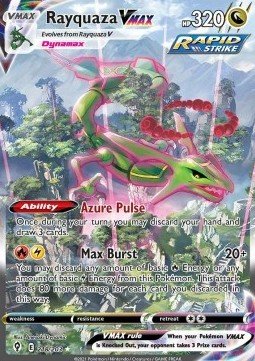
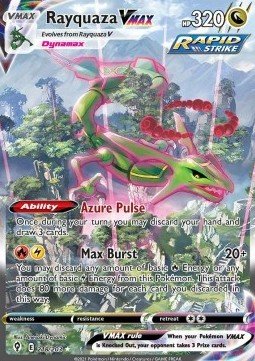
When discussing modern Pokémon TCG investing and elite collecting, few cards command the legendary status and market reverence of the Rayquaza VMAX Alternate Art (commonly referred to by collectors as the “Sky Stream Rayquaza” or Evolving Skies masterpiece). Released as part of the massive Sword & Shield: Evolving Skies expansion, its breathtaking full-art dynamic illustration featuring Rayquaza soaring alongside Zinnia makes it a crown jewel for high-end collectors worldwide.
However, not every copy found on the secondary market or pulled from blister packs is created equal. Unlike vintage cards where surface wear and corner whitening dictate the price, modern “secret rare” alternative art cards face a unique manufacturing enemy: factory centering discrepancies and subtle print lines.
In this comprehensive market analysis, we dive deep into a critical collector’s scenario: evaluating an authentic Rayquaza VMAX #218/203 featuring noticeable front-and-back centering imbalances. How drastically do framing flaws, border thickness variances, and minor edge chipping affect its raw value and grading potential? Let’s break down the data, study the grading tier parameters, and analyze how to safely acquire or price this iconic dragon.
The Anatomy of Rayquaza VMAX’s Value: Raw vs. Graded Tiers
Before analyzing centering-impaired or off-center cards, understanding the baseline pricing tiers helps set the perspective for buyers and sellers:
- Gem Mint (PSA 10 / BGS 9.5+): Flawless copies with immaculate centering (typically a 55/45 to 50/50 ratio on the front and 75/25 or better on the back), crisp corners, and zero print lines command top-tier multi-hundred or thousand-dollar valuations depending on current market swings.
- Near Mint (Raw – Clean): Clean, unplayed cards straight from packs with minor, acceptable manufacturing variances that look pristine in a binder or display case.
- Moderately Played / Heavy Centering Shift: Cards with severe border asymmetry, making the artwork look visibly lopsided or “heavy” on one side, heavily dampening the probability of a high tier score.
- Damaged / Defective (Print Lines & Surface Wear): Cards featuring deep structural vertical/horizontal print lines or surface indentations that completely disqualify them from numerical gem mint contention.
Case Study: Rayquaza VMAX #218/203 with Centering & Border Shifts
Recently, market listings and secondary platforms like Cardmarket and eBay have featured authentic copies carrying specific condition notes, such as “Off-Center Front Border” or “Heavy Right-Side Bleed.”
While a pristine raw copy maintains a high market baseline, physical framing and centering shifts alter the grading potential completely. Professional grading companies like PSA, BGS, and CGC enforce strict mathematical parameters for borders. For a modern card like the Rayquaza VMAX #218/203, a front border ratio worse than 60/40 instantly locks the card out of a PSA 10 designation, automatically capping its potential grade at a PSA 9, even if the surface and corners are entirely flawless.
Why Evolving Skies QC Issues Plague Modern Pulls
The Evolving Skies print run was notoriously plagued by massive quality control (QC) inconsistencies. Collectors worldwide frequently report pulling high-value alternative arts straight out of booster packs only to find:
- Lopsided Borders: The left or top border is significantly thicker than the opposing side.
- Corner Dings from Factory Cutters: Dull blades during the manufacturing process causing micro-frays right out of the wrapper.
- Back-Side Asymmetry: While the front might look acceptable to an untrained eye, the reverse blue Pokémon card back features severe tilt or diagonal misalignment.
Price Comparison Breakdown Table
| Card Condition Tier | Estimated Market Price Range | Grading Potential (PSA) | Centering & Flaw Tolerance |
|---|---|---|---|
| Gem Mint (PSA 10) | Premium Market Value ($300 - $400+) | PSA 10 | Perfect 50/50 to 55/45 Front Borders: Zero Print Lines. |
| Near Mint (Raw - Clean) | Mid - To - High Market Value | PSA 6 To 8 (Estimated) | Clean Surface, Minor Border Shift Up To 60/40. |
| Moderately Played (Off - Center) | Lower Tier Value | PSA 4 To 5 | Noticeable Heavy Border Bias, Mild Edge Wear. |
| Heavy Centering Shift / Defective | Steeply Discounted Collector - Only | PSA 3 Or Ungradable | Extreme Border Clipping Or Severe Factory Miscuts. |
Buyer Tips: How to Evaluate Off-Center Listings Safely
When tracking down rare alternative art cards—whether they are pristine gems or budget-friendly off-center copies—always purchase from verified sellers with high feedback ratings, clear high-resolution photos, and secure protection slabs.
- Ask for Direct Light Angles: Off-center issues are easy to spot, but sellers sometimes hide minor surface scratching under specific flash angles. Always request flat, neutral-lighting scans.
- Measure Borders Visually: Use a digital loupe or a simple grid reference if buying raw online to estimate whether the left-to-right ratio will pass standard grading thresholds.
- Value Adjustments: If a Rayquaza VMAX #218/203 has pristine surfaces but an obvious 70/30 front border skew, never pay Near Mint / Gem Mint raw pricing. Adjust your valuation closer to the lower tier structure, as you are paying for the artwork and play/display value, not future grading appreciation.
The Micro-Texture Holographic Shift: Detecting Counterfeits vs. Factory Misprints
When dealing with high-tier modern cards like the Rayquaza VMAX #218/203 from Evolving Skies, understanding factory variance is vital. Counterfeiters can easily mimic smooth foil shine, but they almost always fail to replicate the complex, fingerprint-like diagonal micro-texture embedded into authentic alternate art cards.
- Authentic Texture Alignment: Even if a genuine Rayquaza VMAX suffers from a severe border shift or factory centering error, the micro-texture will still follow the correct diagonal organic flow across the artwork.
- Spotting Counterfeits: Counterfeit copies usually feature a flat, glossy finish lacking physical depth, or an incorrect vertical-only pattern that immediately flags them as fake under a jeweler’s loupe.
- The Premium on Miscuts: Interestingly, authentic cards with dramatic factory centering shifts accompanied by flawless texturing command a niche premium among error collectors who specialize in modern print anomalies.
Sub-Grade Breakdown: Why BGS Sub-Grades Matter for Rayquaza
While PSA 10 is often considered the gold standard for liquidity, serious high-end investors frequently look at Beckett (BGS) slabs when evaluating cards with manufacturing quirks:
- The Power of Sub-Grades: BGS provides independent scores for Centering, Corners, Edges, and Surface. If a Rayquaza VMAX has a slight 55/45 centering border variance but pristine 10 sub-grades everywhere else, it holds massive long-term prestige.
- Justifying the Price: Savvy buyers prefer BGS slabs because they isolate the exact flaw, proving that an off-center border is a factory default rather than a post-pack handling defect.
Liquidity Dynamics: PSA 10 vs. Raw Pristine Copies in Current Market Trends
In the current macroeconomic climate for high-end Pokémon TCG investing, the liquidity gap between a graded PSA 10 Gem Mint and a raw, pack-fresh “Pristine Raw” copy of the Rayquaza VMAX Alt Art has never been wider. Understanding how market makers and high-net-worth collectors price this volatility is crucial:
- The PSA 10 Liquidity Premium: Graded copies command immediate liquidity on platforms like eBay and PWCC because institutional and digital vault buyers can trade slabs sight-unseen without authentication friction.
- The Raw Investor Risk: Buying a raw copy online always carries a hidden “surface risk” premium discount of 15% to 30% compared to estimated grading value, purely because buyers factor in the unseen micro-scratch potential from factory sorting machines.
- Cross-Border Arbitrage: European collectors sourcing cards via platforms like Cardmarket often find pricing inefficiencies on raw English copies compared to US-based TCGPlayer markets—making meticulous photo requests (under neutral daylight angles) the ultimate weapon for finding underpriced gems.
Conclusion
Centering discrepancies and factory alignment shifts act as an absolute ceiling for a card’s financial appreciation. While the majestic artwork of the Rayquaza VMAX remains stunning regardless of minor framing misalignments, buyers and collectors must weigh aesthetic flaws against asking prices carefully. By understanding these nuances, you protect your collection and build an authoritative, transparent resource for other TCG enthusiasts.